


How to Help a Child With Hair Loss Feel Confident at School
- Written by Little heroes hair
- |
- Sep 30, 2026
- |
- 6 min read
A practical guide for parents and caregivers
For a child experiencing hair loss, returning to school can bring mixed emotions. They may feel excited to see friends while also worrying about questions, staring, teasing, or whether their wig will stay comfortable throughout the day.
Parents cannot control every reaction their child may encounter. With preparation, communication, and the right support system, however, they can help school feel safer, more predictable, and more empowering.
Whether a child's hair loss is related to alopecia areata, chemotherapy, burns, trichotillomania, or a congenital condition, the goal is not to make them hide. The goal is to give them choices, confidence, and people they can trust.
1 Let Your Child Lead the Conversation
Before contacting the school or talking with classmates, ask your child what they want.
Some children feel comfortable explaining their hair loss openly. Others prefer to tell only a teacher or close friend. Some want to wear a wig every day, while others may alternate between a wig, hat, scarf, or uncovered scalp.
Try questions such as:
• Who would you like to know about your hair loss?
• What would you like your teacher to say if someone asks?
• Would you like to answer questions yourself, or would you rather an adult help?
• What would make you feel more comfortable at school?
Children may change their minds over time. Keep the conversation open and remind them that they are allowed to make different choices on different days.
2 Build a Small School Support Team
Before the first day back, consider speaking privately with the classroom teacher, school counselor, nurse, and another trusted staff member.
You do not have to share every medical detail. Focus on what the school needs to know to support your child. This may include:
• The child's preferred words for describing their hair loss
• Whether the child wants classmates to know
• Whether they wear a wig, hat, scarf, or other head covering
• What to do if the wig becomes uncomfortable, loose, or damaged
• Who the child can visit when they need privacy or a short break
• Signs that the child is feeling overwhelmed
• How the school should respond to teasing, unwanted touching, or bullying
Ask for one designated adult your child can approach without having to explain everything again. Knowing exactly where to go can reduce anxiety.
For children attending public school in the United States, parents may also ask whether an individualized health plan, Section 504 evaluation, or other school support may be appropriate if an illness or treatment substantially affects attendance, energy, concentration, access to school, or another major life activity. Eligibility and services are determined individually by the school.
3 Prepare a Simple Answer for Questions
Children often feel more confident when they have a short response ready. Practice several options and let your child choose the one that feels natural.
A direct answer
If this is accurate for your child's diagnosis, they may say:
"I have a condition that affects my hair. My doctor says it is not contagious."
A short answer
"My hair is different right now, and I'm okay."
A boundary setting answer
"I don't want to talk about my hair today."
If someone asks about the wig
"Yes, it's a wig. I chose it because I like how it looks."
If someone tries to touch it
"Please don't touch my hair or wig. Ask me first."
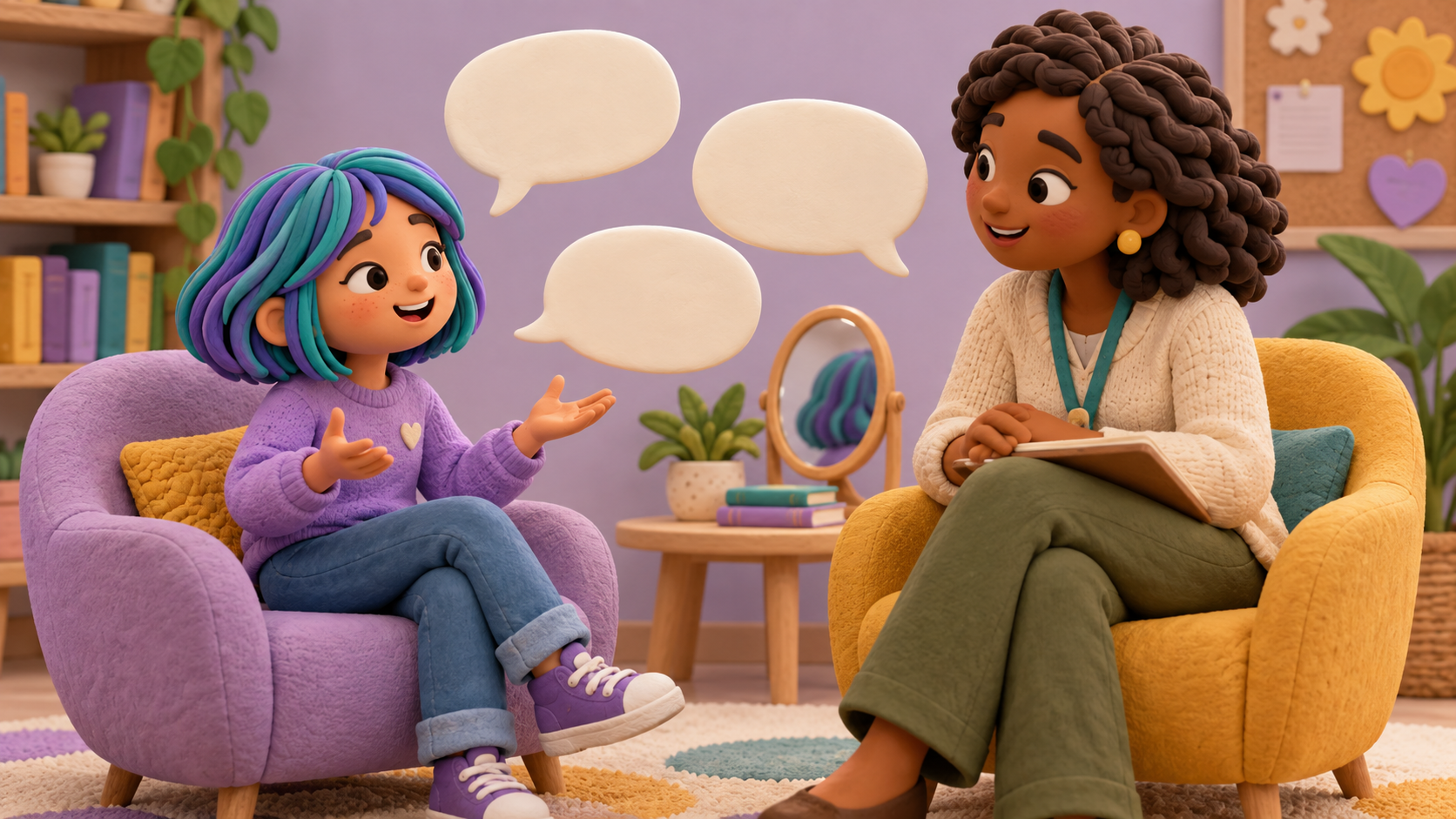
Practicing simple responses can help a child feel prepared without requiring them to explain their medical history.
Practice should feel supportive, not like a test. Role-play for a few minutes and include an exit plan, such as walking toward a teacher, sitting with a friend, or changing the subject.
4 Make Wig Comfort Part of the School Plan
A wig should support a child's confidence, not become another source of stress.
Before school begins, let the child wear the wig at home for gradually longer periods. Practice common school activities such as putting on a backpack, looking down to write, walking quickly, playing gently, and removing a jacket.
Check that the wig:
• Fits securely without feeling painfully tight
• Does not rub the ears, hairline, or sensitive areas of the scalp
• Works comfortably with glasses or hearing devices
• Stays manageable during normal movement
• Can be removed privately if the child needs a break
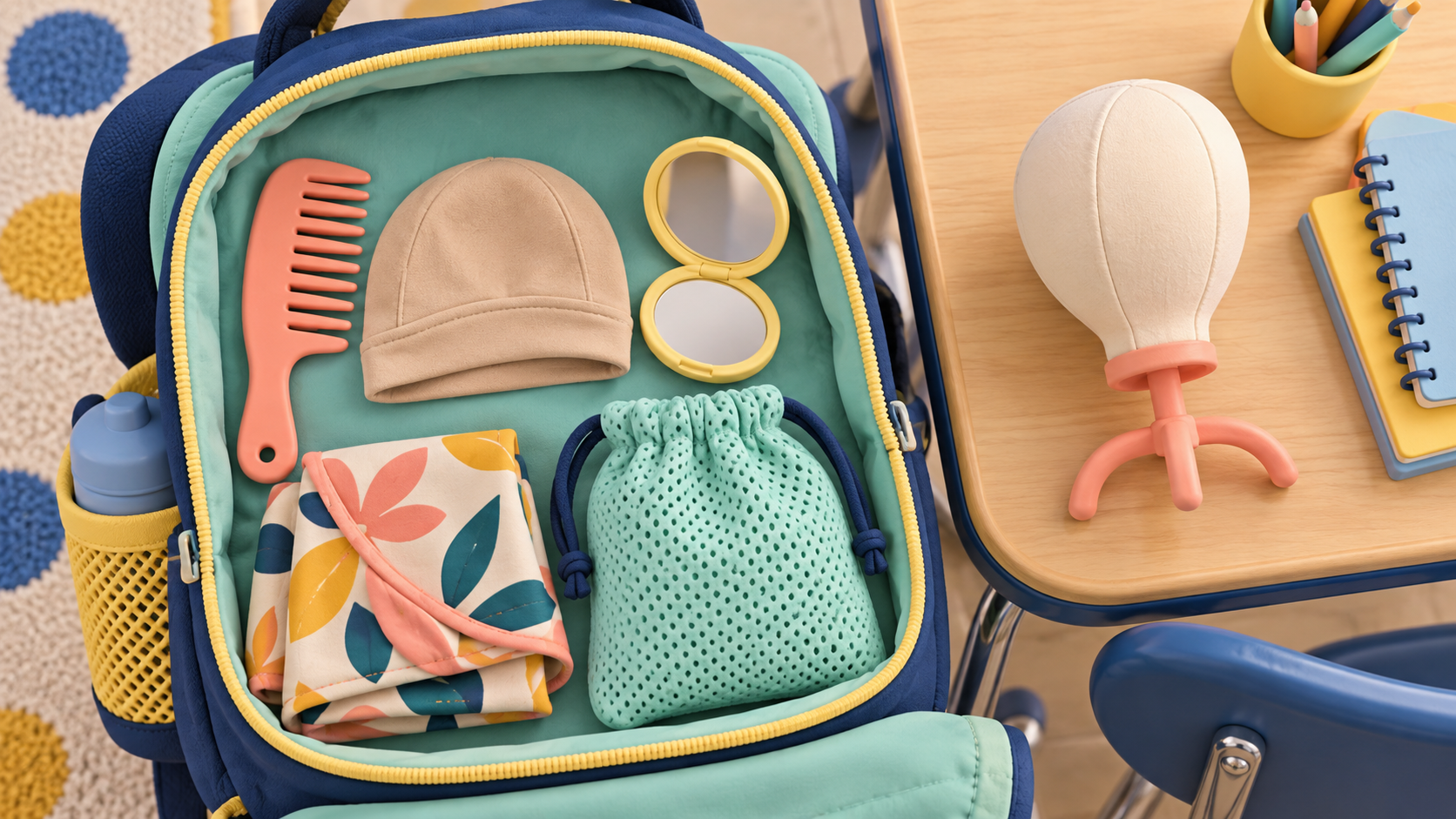
A discreet comfort kit can give a child practical options during the school day.
Pack a discreet comfort kit if the child wants one. It might include a wide-tooth comb, soft liner, small mirror, scarf or hat, and a breathable bag or container. Include adhesive or scalp products only when recommended by the child's healthcare team or wig specialist. Make sure the child and a trusted adult know how each item should be used.
For children receiving cancer treatment or managing a sensitive scalp, follow the medical team's instructions. Gentle care, sun protection, and avoiding irritating products may be especially important.
5 Give the Child Choices Beyond a Wig
A wig can be a wonderful option, but it should not feel like a requirement.
On some days, a child may prefer:
• A soft hat or beanie
• A scarf or head wrap
• A different wig or hairstyle
• An uncovered scalp
Confidence does not mean looking the same every day. It means feeling ownership over how to show up.
If school rules normally restrict hats or head coverings, discuss an exception in advance so the child is not questioned in front of classmates.
6 Create a Plan for Physical Education Recess and Field Trips
Active parts of the school day may create extra worries about heat, sweat, wind, water, or accidental pulling.
Talk with the child and school about:
• Whether the wig feels secure during running and jumping
• Whether the child wants to remove it for certain activities
• A private place to make adjustments
• Alternative head coverings for warm weather
• How to store the wig safely during swimming or high-contact activities
• Who will carry the comfort kit during a field trip
Do a few movement tests at home. The goal is not to make the wig impossible to move; it is to discover what helps the child feel secure before a stressful moment happens.
7 Respond to Bullying Early
Curiosity and bullying are not the same. A respectful question can be answered or declined. Repeated teasing, threats, exclusion, rumor-spreading, unwanted touching, or attempts to remove a child's wig require adult intervention.
Tell your child clearly:
• Bullying is not their fault.
• They do not have to handle it alone.
• Telling a trusted adult is not tattling.
• They should move toward safety rather than fight over the wig.
Keep a written record of incidents, including dates, locations, witnesses, screenshots, and how the school responded. Ask the school for its anti-bullying procedure and a written safety plan when appropriate.
Watch for possible warning signs such as school avoidance, unexplained headaches or stomachaches, lost belongings, disrupted sleep, falling grades, sudden withdrawal, or changes in eating habits. These signs do not always mean bullying is occurring, but they are a reason to check in calmly.
8 Protect Privacy Without Creating Shame
Medical privacy matters. So does helping a child understand that hair loss is not something shameful.
Avoid discussing the child's diagnosis, treatment, or wig with other parents or students unless the child and family have agreed. When information does need to be shared, use neutral language and focus on respect.
For example, a teacher might say:
"People can look different for many reasons. We do not touch another person's body, hair, clothing, or belongings without permission."
This reinforces boundaries without placing the child at the center of unwanted attention.
9 Keep Confidence Bigger Than Appearance
Hair loss may be visible, but it is only one part of a child's life.
Continue making space for the things that help the child feel capable and connected: art, sports, music, reading, science, gaming, clubs, friendships, family traditions, or helping others.
Instead of commenting only on appearance, also say:
• I noticed how brave you were when you asked for help.
• You were a thoughtful friend today.
• You worked hard on that project.
• I love the way you expressed your own style.
Appearance-based reassurance can feel good, but children also benefit from hearing that their courage, humor, kindness, ideas, and skills matter.
10 Know When to Seek Extra Support
Occasional worry or sadness can be a normal response to hair loss. Extra help may be needed when distress persists, interferes with school or friendships, or begins to affect daily life.
Contact the child's pediatrician, treatment team, school counselor, child-life specialist, or a licensed mental health professional if the child:
• Refuses school repeatedly
• Stops participating in activities they previously enjoyed
• Remains withdrawn, hopeless, or highly anxious
• Has major changes in sleep or appetite
• Experiences ongoing bullying
• Talks about self-harm or not wanting to live
If a child is in immediate danger or may harm themselves, contact emergency services. In the United States, call or text 988 to reach the 988 Suicide and Crisis Lifeline.
Peer support can also make a meaningful difference. Meeting another young person who understands hair loss may help a child feel less isolated.
A One Week Back to School Confidence Plan
One week before
• Ask the child what they want others to know.
• Check the fit and comfort of the wig or head covering.
• Contact the teacher, counselor, or nurse.
• Choose a trusted adult and private adjustment space.
Three days before
• Practice two short responses to questions.
• Test the wig during normal movement.
• Prepare a comfort kit.
The night before
• Let the child choose their wig, hat, scarf, or uncovered look.
• Keep the morning routine simple.
• Remind them who they can ask for help.
After the first day
Ask open questions such as:
• What part of today felt easiest?
• Was there a moment you wished an adult had helped?
• Would you like to change anything for tomorrow?
Try not to begin with, "Did anyone make fun of you?" A broader question may make it easier for the child to share both positive and difficult moments.
Final Thoughts
A successful return to school is not a day without questions or nervousness. It is a day when a child knows they have choices, boundaries, and trusted people ready to support them.
At Little Heroes Hair, we believe every child deserves to feel seen for who they are - not defined by hair loss. We provide free, customized human-hair wigs to eligible children ages 0-18 experiencing medically related or congenital hair loss.
To learn more about our program or begin an application, visit littleheroeshair.org or contact [email protected].
This article is for general educational purposes and is not a substitute for medical, mental health, or legal advice. Families should consult their child's healthcare team and school regarding individual needs.
Sources and Further Reading
• NAAF Alopecia Areata in Children
• NAAF School Staff Resources
• NCI Support for Families
• NCI Hair Loss and Cancer Treatment
• StopBullying.gov Warning Signs
• US Department of Education Section 504
Comments
No comments yet.