

10 Common Wig Mistakes Parents Should Avoid
- Written by Little heroes hair
- |
- Sep 29, 2026
- |
- 6 min read
Choosing a wig for a child involves much more than selecting a color or hairstyle. The wig must fit comfortably, protect a potentially sensitive scalp, suit the child’s daily routine, and reflect what the child actually wants.
Even well-intentioned families can make mistakes when selecting, fitting, wearing, washing, or storing a child’s wig. Some mistakes cause only inconvenience, while others may lead to discomfort, tangling, premature damage, or scalp irritation.
Here are ten common mistakes—and what parents can do instead.
1. Choosing a Wig Without Involving the Child
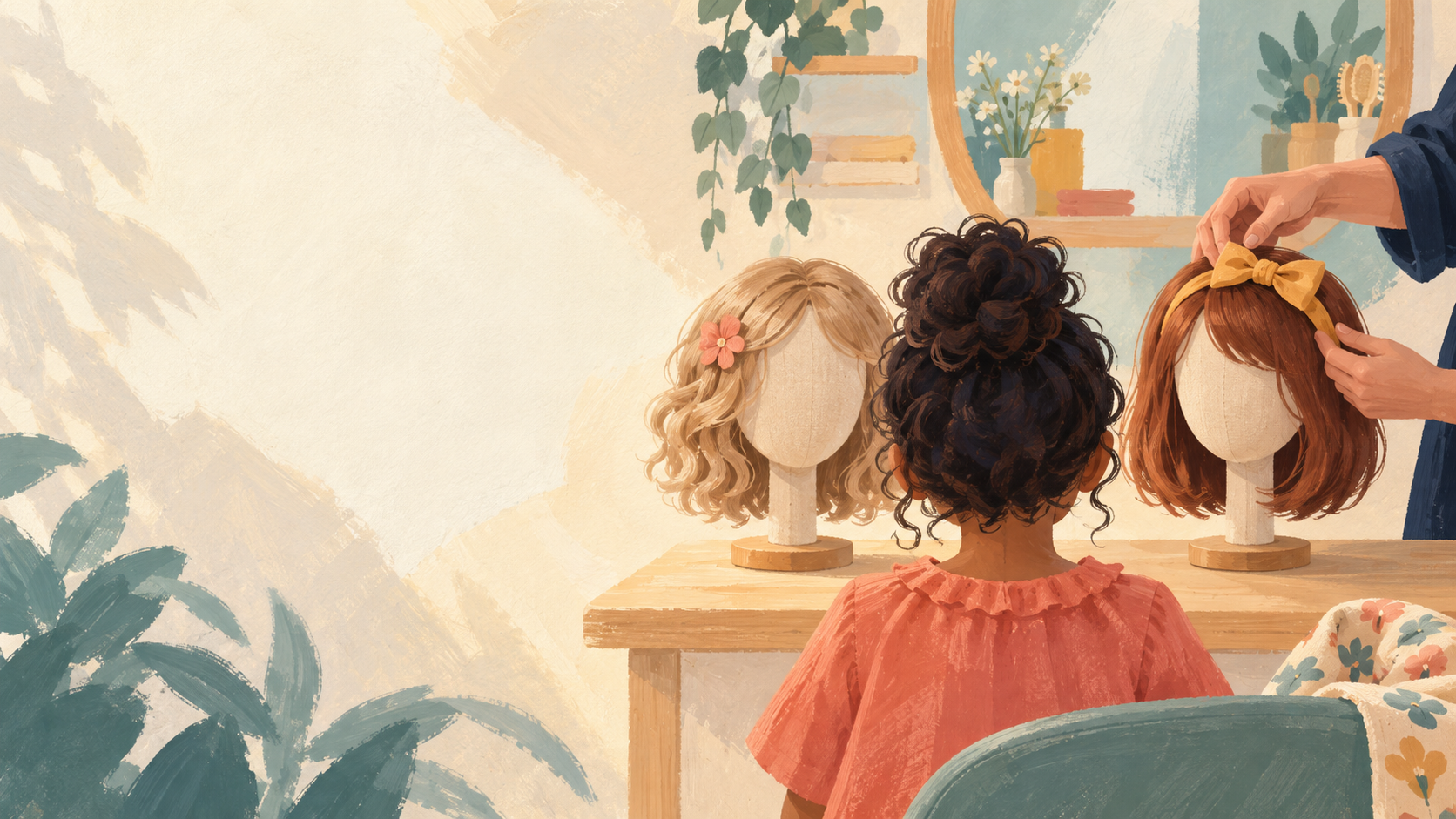
Parents naturally want to find a solution quickly, especially when hair loss has been sudden or emotionally difficult. However, choosing a wig without the child’s input can make the experience feel like another decision being made for them.
A child may want a wig that closely resembles their natural hair. Another child may prefer a completely different color or style. Some children want to wear a wig every day, while others prefer a hat, scarf, or no covering at all.
The National Cancer Institute recommends allowing children to participate in choosing a wig, hat, or scarf when treatment may cause hair loss.
What to do instead: Show the child a small number of age-appropriate choices and ask what feels comfortable. Respect that their preferences may change.
A wig should always be presented as an option—not a requirement.
2. Selecting a Wig Based Only on Appearance
A wig may look beautiful in a photograph but still be uncomfortable or impractical for a child’s daily life.
Long, thick hair may require frequent detangling. A heavy cap may feel too warm during school or outdoor activities. A style that requires daily heat styling may not be realistic for a busy family.
Before choosing a wig, consider:
- How frequently the child plans to wear it
- School and activity schedules
- Climate and temperature
- Sports or physical activity
- Sensory sensitivities
- The child’s ability to manage the wig independently
- How much styling and maintenance the family can provide
What to do instead: Balance appearance with weight, breathability, maintenance, comfort, and the child’s routine.
The best wig is not simply the most attractive one. It is the one the child feels comfortable wearing.
3. Guessing the Child’s Wig Size
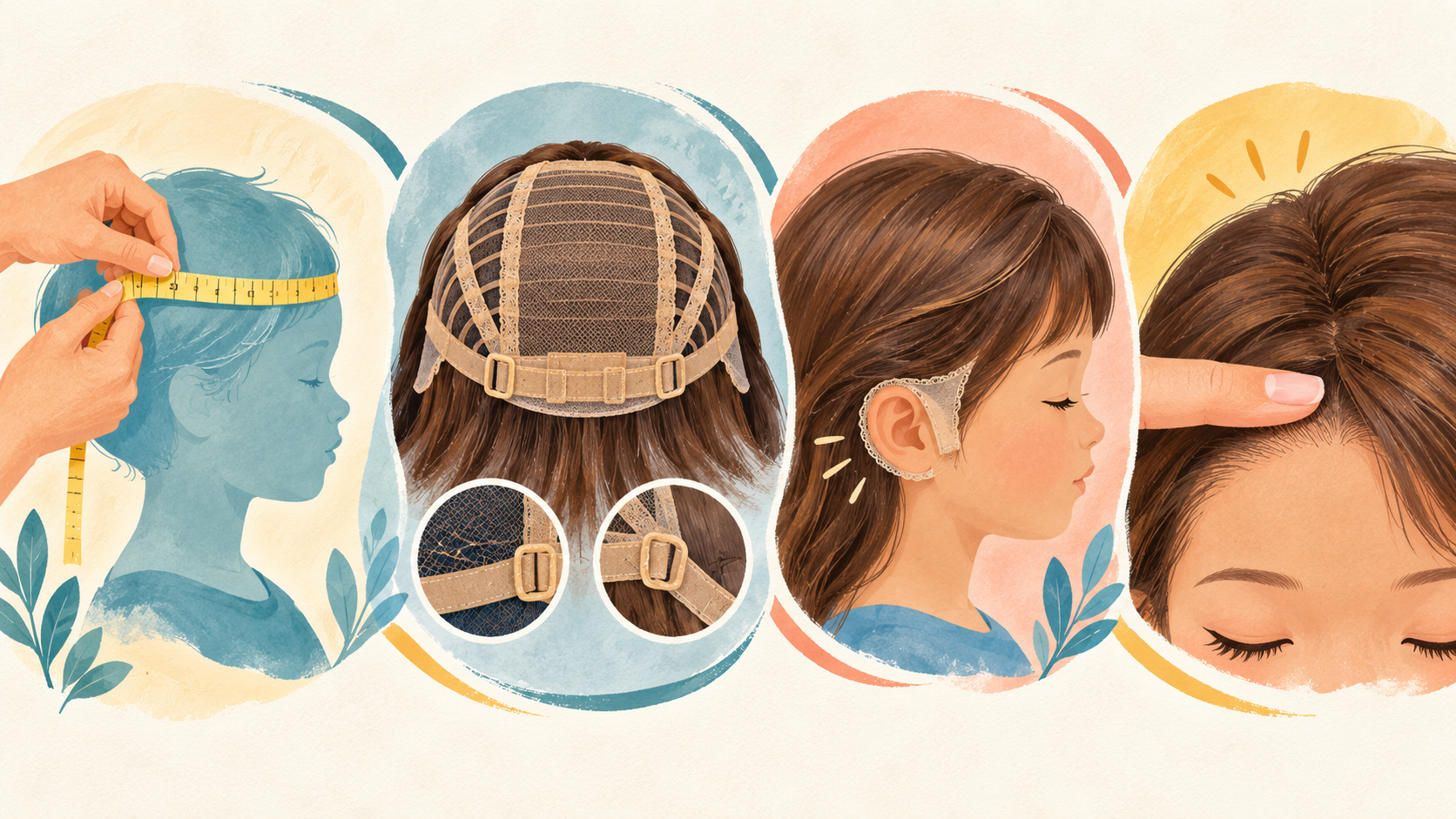
A wig that is too large may slide, shift, or rise at the back. A wig that is too small may cause painful pressure, headaches, rubbing, or visible tension around the hairline.
Head circumference alone may not provide enough information for a truly customized fit. Additional measurements can include:
- Front hairline to the nape
- Ear to ear across the forehead
- Ear to ear over the top
- Temple to temple around the back
- Width of the nape
If the child is expected to lose more hair, the fit may change as the amount of natural hair decreases. The American Cancer Society notes that an adjustable wig may help accommodate changes in head fit after hair loss.
What to do instead: Follow the wig provider’s measurement instructions carefully. Take every requested measurement more than once and ask for assistance if the numbers are inconsistent.
4. Believing That Tighter Always Means More Secure
Parents may tighten a wig excessively because they are worried it will move or fall off.
A wig should feel secure, but excessive tightness can cause headaches, pressure, rubbing, and discomfort. It may also make the child reluctant to wear it again.
Signs that a wig may be too tight include:
- Red marks after removal
- Headaches
- Pain near the temples or ears
- Pinching at the nape
- The child repeatedly touching or adjusting the wig
- Discomfort that increases throughout the day
What to do instead: Check the cap size, placement, adjustable straps, ear tabs, liner, and grip band. If the wig continues to move, ask a wig professional to inspect the fit rather than simply tightening it.
A secure fit should not be painful.
5. Using Adhesive on Irritated or Healing Skin
Wig tape or adhesive may be helpful for some wearers, but it is not appropriate for every child or every scalp condition.
Children receiving chemotherapy or radiation therapy may experience tenderness, dryness, redness, or increased skin sensitivity. Burns, surgical sites, infections, and other medical conditions may also affect which products are safe to use.
St. Jude advises families to follow the child’s care team’s instructions for sensitive or treatment-affected skin.
What to do instead:
- Ask the medical team before applying adhesive to a medically affected scalp
- Never apply adhesive over broken, painful, infected, or inflamed skin
- Use only products made for wig or hair-system application
- Follow the manufacturer’s removal instructions
- Consider a soft liner or cushioned grip band when appropriate
Never pull an adhered wig directly from the scalp without first releasing the adhesive correctly.
6. Washing the Wig Too Frequently
A wig does not usually need to be washed after every wear.
Overwashing can dry the hair, loosen knots, fade color, increase tangling, and reduce the wig’s usable lifespan.
How often a wig needs cleaning depends on:
- How often it is worn
- Sweating and physical activity
- Weather and humidity
- Styling product use
- Exposure to smoke, dust, or odors
- The type of hair and cap construction
What to do instead: Wash the wig when it genuinely needs cleaning and follow the wig maker’s instructions.
A child who wears a wig occasionally will usually need a different cleaning schedule from a child who wears it throughout every school day.
7. Using Ordinary Hair Products Without Checking
Products designed for naturally growing hair are not always suitable for wigs.
Some shampoos are too harsh and can dry the hair. Heavy oils and conditioners may create buildup or loosen hand-tied knots when applied directly to the base. Alcohol-heavy styling products may also affect the hair or cap.
The American Cancer Society recommends using hair-care products formulated specifically for wigs.
What to do instead:
- Use products approved for the wig’s material
- Confirm whether the wig is human hair or synthetic
- Apply conditioner mainly to the mid-lengths and ends
- Avoid saturating the base with heavy products
- Use the smallest amount of styling product necessary
When uncertain, ask the wig provider before trying a new product.
8. Brushing From the Top Down
Pulling a brush from the roots through tangled hair places unnecessary stress on the strands and wig base.
This is especially damaging to longer wigs, curly textures, and delicate hand-tied areas.
What to do instead:
- Place the wig securely on a suitable stand.
- Divide the hair into manageable sections.
- Hold the hair above the section being detangled.
- Begin at the ends.
- Slowly work upward toward the base.
- Use a wide-tooth comb or brush recommended for the wig.
Do not pull forcefully through a knot. Gently separate the strands with your fingers before continuing.
9. Using Too Much Heat
Hair dryers, flat irons, curling irons, hot water, ovens, fireplaces, and even sudden heat from an open stove can damage a wig.
Most standard synthetic wigs cannot tolerate heated styling tools. Human hair wigs may permit heat styling, but excessive temperature can still cause dryness, breakage, color changes, or damage to the cap and knots.
The American Cancer Society advises against using heated tools unless the wig is confirmed to be heat-resistant.
What to do instead:
- Confirm the wig’s heat limitations
- Use the lowest effective temperature when heat is permitted
- Keep heated tools away from the cap and base
- Avoid holding heat in one place
- Allow the wig to air-dry whenever possible
- Keep the wig away from ovens, grills, fireplaces, and open flames
“Human hair” does not mean that unlimited heat is safe.
10. Storing the Wig While It Is Damp
Placing a damp wig inside a sealed bag, drawer, or box can create odors, tangling, and damage to both the hair and the cap.
Crushing a wig beneath clothing or other objects may also distort its shape.
What to do instead:
- Gently blot excess water with a soft towel
- Allow the wig to air-dry completely
- Place it on an appropriate stand
- Keep it away from direct sunlight and heat
- Protect it from dust, pets, and young children
- Use a suitable wig box or breathable storage bag for travel
Never wring or twist the wig to remove water.
Bonus Mistake: Forgetting to Prepare for School
Even when a wig fits well, a child may still worry about wearing it around classmates.
Parents can help by planning ahead:
- Ask how the child wants to answer questions
- Inform a teacher or counselor privately
- Identify a trusted adult who can help with adjustments
- Pack a small mirror, comb, or backup head covering
- Discuss what to do if someone touches or pulls the wig
- Let the child decide how much personal information to share
Avoid promising that no one will notice the wig. Instead, help the child prepare for different situations and remind them that they do not have to answer personal questions.
The National Cancer Institute recommends helping children decide how they want to respond when people stare, make comments, or ask questions about changes in appearance.
What If the Child Does Not Want to Wear the Wig?
Do not assume that refusing a wig means the child is ungrateful or difficult.
The wig may feel too warm, heavy, tight, itchy, unfamiliar, or emotionally uncomfortable. The child may also prefer a hat, scarf, or uncovered head.
Ask specific, neutral questions:
- Does anything hurt?
- Does it feel too hot?
- Does it move when you turn your head?
- Do you like the style?
- Would you prefer to wear it for shorter periods?
- Would another option feel better today?
The answer may reveal a correctable fitting problem—or simply a personal preference that should be respected.
How Little Heroes Hair Helps
Little Heroes Hair provides free, custom-made human hair wigs to eligible children under age 18 experiencing hair loss caused by illness, medical treatment, alopecia, burns, congenital conditions, and other medical circumstances.
Each wig is customized using the child’s measurements and preferences, including hair color, length, texture, and style. The normal production period is approximately six to eight weeks after the required information has been received.
Our goal is not to tell children that they need hair in order to feel confident. Our goal is to give them another choice—and make that choice as comfortable, natural, and personal as possible.
Learn more or apply for a free custom wig.
A Little Knowledge Prevents Many Wig Problems
Most wig mistakes are preventable.
Accurate measurements, a comfortable fit, gentle products, careful detangling, limited heat, proper storage, and honest conversations with the child can make the experience easier for the entire family.
When in doubt, ask the wig provider or the child’s healthcare team before trying a new adhesive, product, or attachment method.
Above all, listen to the child. A wig should support their comfort and confidence—not become another source of pressure.
A Wig, A Smile, A Happier Child.
This article provides general educational information. Consult the child’s healthcare team regarding scalp irritation, wounds, burns, radiation-treated skin, infection, adhesives, or other medical concerns.
Sources
American Cancer Society: Wigs for Hair Loss
National Cancer Institute: Support for Families During Childhood Cancer
Together by St. Jude: Hair Loss in Childhood Cancer
Little Heroes Hair: Free Wigs for Kids
Comments
No comments yet.