


Caring for the Caregiver: Supporting Your Family Through a Child’s Hair-Loss Journey
- Written by Little heroes hair
- |
- Oct 30, 2026
- |
- 6 min read
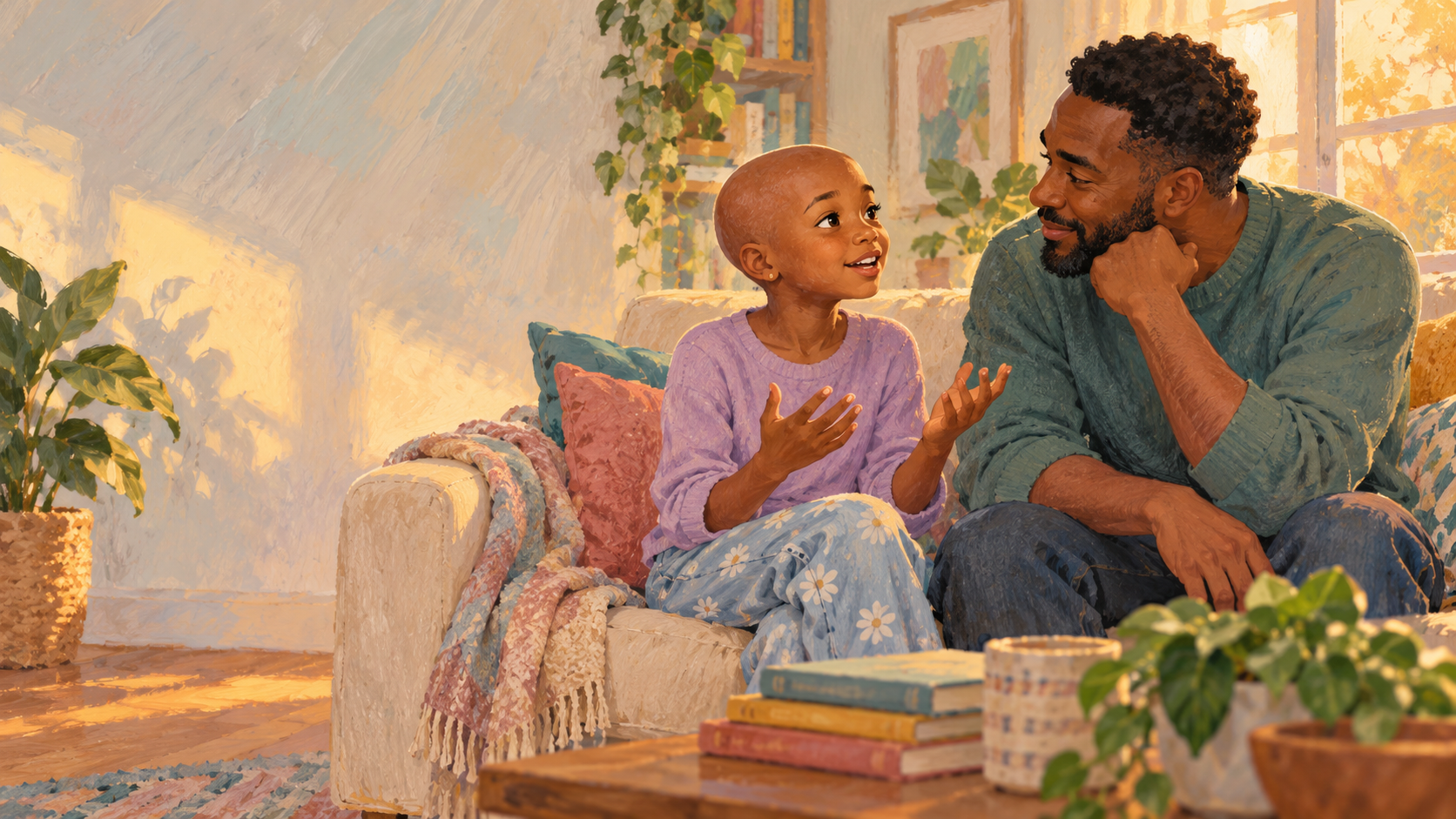
When a child experiences hair loss because of cancer treatment, alopecia areata, a burn injury, a congenital condition, or another medical reason, the whole family may feel the impact.
Parents and caregivers often become experts at managing appointments, school schedules, treatment questions, wig options, and other people’s concerns. Their own emotions, however, may be pushed to the bottom of the list.
You may feel worried, sad, frustrated, guilty, exhausted, or uncertain about what to say. You may also have good days when hair loss does not feel like the family’s biggest concern. All of these reactions can exist together.
Caring for yourself does not mean taking attention away from your child. It helps you remain present, patient, and emotionally available as your family adjusts.
Your Child’s Feelings May Be Different From Yours
Adults sometimes assume that a child must feel embarrassed or deeply upset about losing their hair. Some children do—but others may be more concerned about treatment, school, sports, friendships, or simply getting back to their normal routine.
A child’s feelings may also change from day to day. They may want to wear a wig at school but not at home. They may enjoy answering questions one week and prefer privacy the next.
Instead of guessing, try asking:
“How are you feeling about your hair today?”
“Is there anything you want to change or try?”
“Would you like me to listen, help you make a plan, or give you some space?”
“Do you want other people to know, or would you rather keep this private?”
Following your child’s cues helps prevent adult fears from becoming the child’s responsibility.
Use Honest, Age-Appropriate Language
Children often notice more than adults realize. When information is missing, they may create their own explanation—and that explanation may be more frightening than the truth.
Use simple language based on information from your child’s healthcare team. Younger children may need a short explanation, while older children and teenagers may want more details.
Helpful phrases may include:
“Your hair is changing because of your medical condition or treatment.”
“This is not your fault.”
“I don’t know exactly what will happen yet, but we can ask the medical team together.”
“You can always ask me questions, even if I do not have every answer.”
“You get to help decide what feels most comfortable for you.”
Avoid promising that hair will grow back unless your child’s healthcare provider has confirmed that outcome. An honest “We don’t know yet” can build more trust than reassurance that may not be accurate.
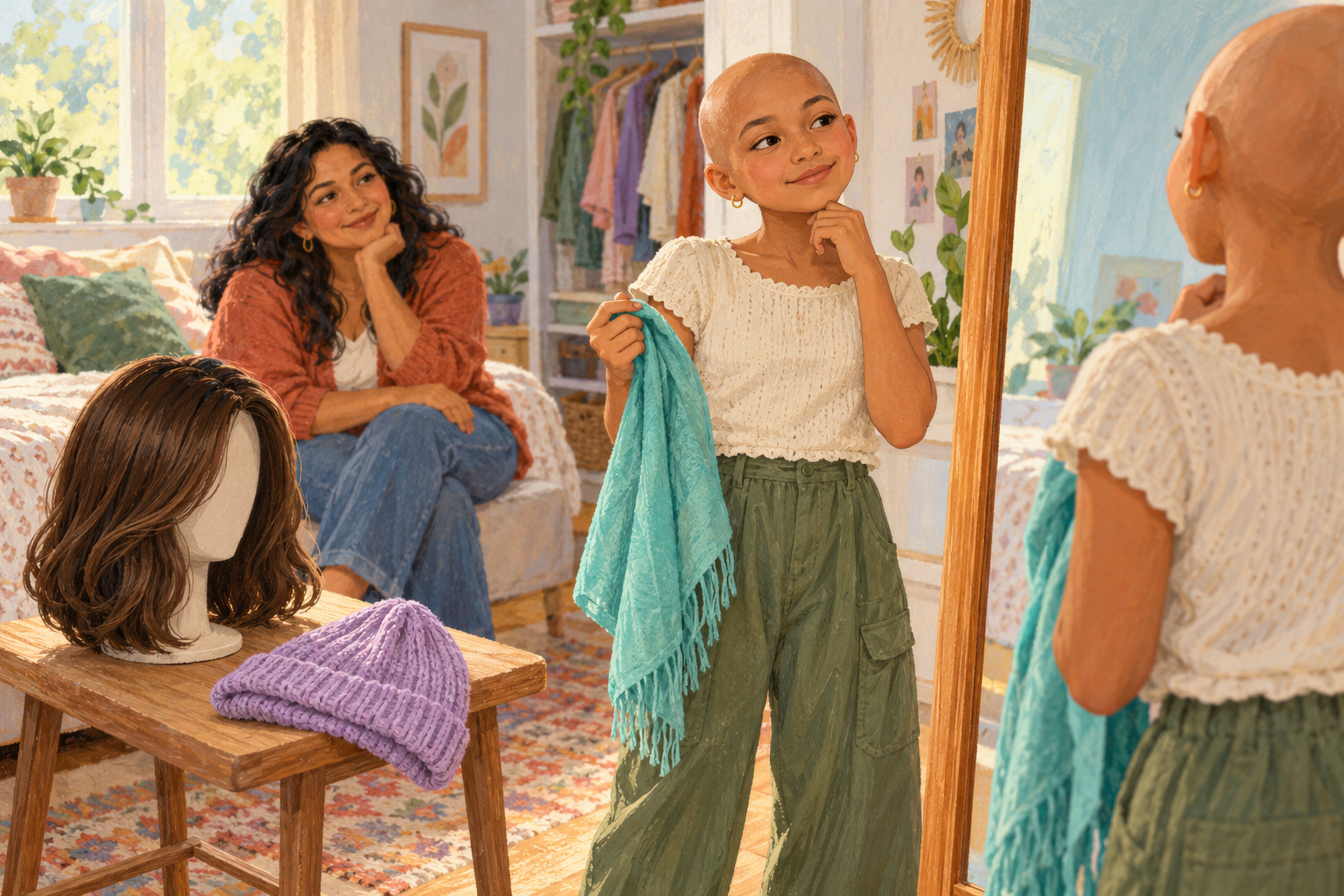
Listen Before Trying to Fix the Feeling
Caregivers naturally want to make difficult feelings disappear. But children do not always need an immediate solution. Sometimes they need an adult who can stay with the feeling without becoming overwhelmed by it.
If your child says, “I hate how I look,” immediately responding with “No, you look beautiful!” may unintentionally close the conversation.
You might try:
“It sounds like today has been really difficult. Do you want to tell me what happened?”
This does not mean you agree with every negative thought. It means you are showing your child that difficult emotions are safe to discuss.
Try to avoid phrases such as:
“You have to stay positive.”
“At least it is only hair.”
“Other children have it worse.”
“You need to be strong.”
“Don’t worry about what people think.”
Even well-intended statements can make a child feel that sadness, anger, or fear is unacceptable.
Give Your Child Meaningful Choices
Medical conditions can make children feel that many decisions are being made for them. Small, genuine choices can help restore a sense of control.
Depending on your child’s age, choices may include:
Wearing a wig, hat, scarf, or an uncovered scalp
Choosing a wig style, length, color, or texture
Deciding when and where to wear a wig
Choosing who receives information about their hair loss
Selecting which photos may be shared
Deciding whether they want help answering questions
Participating in conversations with teachers or school staff
A wig should be presented as an option for comfort and self-expression—not as something a child must wear to look “normal.”
Children may also change their minds. A choice made today does not have to become a permanent rule.
Protect Your Child’s Privacy
Parents may need support from relatives, friends, or online communities. However, a child’s diagnosis, appearance, and hair-loss journey are also part of their personal story.
Before posting photos, sharing medical updates, or discussing the child’s hair loss with other families, consider asking for permission when developmentally appropriate.
For example:
“Grandma asked how you are doing. What would you like me to tell her?”
Teenagers may be especially sensitive about who receives information. Respecting their privacy can strengthen trust and help them feel more in control.
Caregivers still deserve support, but adult fears and personal details can often be shared privately with another trusted adult, counselor, or support group.
Keep Ordinary Childhood in the Picture
Hair loss may be visible, but it should not become the child’s entire identity.
Continue familiar activities when medically appropriate:
Family meals
Games and hobbies
School routines
Time with friends
Sports or creative activities
Favorite family traditions
Try to talk about subjects that have nothing to do with hair loss or medical care. Ask about a book, a friend, a game, or something funny that happened that day.
These moments remind children that they are still themselves—not simply a diagnosis, a treatment plan, or a wig recipient.
Prepare for School and Social Situations Together
Returning to school can bring questions, comments, or unwanted attention. Planning ahead may reduce uncertainty, but the plan should include the child’s preferences.
Ask whether your child wants a trusted teacher, school nurse, counselor, or administrator to know about the hair loss. Discuss exactly what information may be shared with classmates.
You can also practice short responses together:
“I have a medical condition that affects my hair.”
“My hair changed because of treatment.”
“I don’t want to talk about it right now.”
“This is a wig, and I chose it because I like it.”
“Please don’t touch my hair or wig.”
Your child does not owe everyone an explanation. “I don’t want to talk about it” is a complete answer.
If teasing, unwanted touching, exclusion, or bullying occurs, document what happened and contact the appropriate school staff. The responsibility for stopping bullying belongs to the adults—not to the child experiencing it.
Remember the Needs of Siblings
Brothers and sisters may feel worried, confused, overlooked, protective, or even jealous of the attention their sibling is receiving. These reactions do not make them uncaring.
Offer simple, age-appropriate information and give siblings opportunities to ask questions. When possible, spend individual time with them, even if it is only a short walk, bedtime conversation, or shared activity.
Avoid asking siblings to become emotional caretakers, medical messengers, or constant monitors. They can be supportive family members while still being allowed to remain children.
Build a Practical Support Team
“Let me know if you need anything” is kind, but it can be difficult to answer when a caregiver is already overwhelmed.
When someone offers help, consider requesting one specific task:
Picking up groceries
Preparing a meal
Driving a sibling to an activity
Sitting with your child during an appointment
Taking notes during a medical conversation
Helping research school resources
Handling one weekly household task
Some families also choose one trusted person to provide updates to relatives and friends. This can reduce the need to repeat the same information many times.
Support may come from relatives, friends, faith communities, school staff, other parents, social workers, counselors, or caregiver support groups. The right support team will look different for every family.
Care for Yourself in Realistic Ways
Caregiver self-care does not need to be expensive, time-consuming, or perfect.
It may mean:
Eating a regular meal
Taking prescribed medications
Keeping your own medical appointments
Stepping outside for ten minutes
Asking another adult to take over one task
Protecting a small part of your sleep routine
Turning off your phone for a short period
Setting boundaries around unsolicited advice
Talking honestly with someone you trust
You do not need to remain positive every moment. The goal is not to eliminate every difficult emotion. The goal is to have a safe place to process those emotions so your child does not feel responsible for managing them.
Know When Additional Support May Help
Occasional sadness, worry, frustration, or reluctance to talk can be part of adjusting to hair loss. Additional support may be helpful when emotional changes are persistent, intense, or interfere with daily life.
Consider contacting your child’s pediatrician, medical team, school counselor, or a qualified mental-health professional if your child experiences:
Ongoing withdrawal from family or friends
Frequent school avoidance
Persistent sleep or appetite changes
Intense anxiety about appearance or social situations
Loss of interest in activities they previously enjoyed
Major or lasting changes in behavior
Emotional distress that is becoming harder to manage
Caregivers should also seek support if anxiety, sadness, anger, exhaustion, or hopelessness makes it difficult to complete daily responsibilities.
Counseling is not evidence that a family has failed. It is another form of support, just like medical care, school assistance, or practical help from relatives.
If you believe that you or your child is in immediate danger, contact local emergency services or seek urgent medical assistance.
A Five-Question Caregiver Check-In
When everything feels urgent, pause and ask:
What does my child need today—not for the entire future?
What do I need today?
Which decision can safely wait?
Who can help with one specific task?
What choice can I return to my child?
You do not need to solve the whole journey in one day.
How Little Heroes Hair Can Help
Little Heroes Hair provides free customized human-hair wigs to eligible children ages 0–18 experiencing medically related or congenital hair loss.
A wig cannot remove every emotional or medical challenge, and it is not the right choice for every child. However, for children who want one, a customized wig can offer another option for comfort, self-expression, and participation in everyday life.
If your child is experiencing medically related or congenital hair loss, you do not have to navigate every decision alone.
Learn more about our wig program and application process at littleheroeshair.org.
Frequently Asked Questions
Should I encourage my child to wear a wig?
You can offer a wig as one option without pressuring your child to wear it. Some children enjoy wearing a wig every day, while others prefer hats, scarves, an uncovered scalp, or different choices in different situations.
What if my child does not want to talk about hair loss?
Let your child know that you are available without forcing a conversation. Some children talk more easily during a walk, while driving, drawing, or doing another activity together.
What should I say if my child asks whether their hair will grow back?
Use the information provided by the medical team. If the answer is uncertain, it is okay to say, “We don’t know yet, but we can ask together.”
Is it okay for my child to see me upset?
Children do not need caregivers who never show emotion. They need reassurance that adult feelings are not their responsibility. You can say, “I’m having a hard moment, but this is not your fault, and I have adults I can talk to.”
Medical and Mental-Health Disclaimer:
This article provides general educational information and is not a substitute for medical diagnosis, treatment, or professional mental-health care. Always consult your child’s qualified healthcare providers regarding their individual needs.
Sources and Further Reading
National Cancer Institute – Children with Cancer: A Guide for Parents
American Academy of Dermatology – Alopecia Areata: Self-Care
HealthyChildren.org – Emotional Wellness
St. Jude Together – Resources for Families
Comments
No comments yet.