


Halloween Without Hiding: Costume, Wig, and Scalp Safety Tips for Children With Hair Loss
- Written by Little heroes hair
- |
- Oct 29, 2026
- |
- 5 min read

Halloween is a chance for children to become anyone they want—a superhero, a favorite character, a mysterious creature, or something entirely original.
For a child experiencing hair loss, however, costume planning can sometimes bring extra questions:
- Will my wig stay comfortable?
- What if someone tries to touch it?
- Can I wear a costume wig?
- Will makeup irritate my scalp?
- What should I do if I need a break?
- With a little preparation, Halloween can remain what it should be: creative, exciting, and centered on the child—not their hair loss.
Whether a child’s hair loss is related to alopecia areata, cancer treatment, burns, a congenital condition, or another medical cause, these practical tips can help families plan a costume that feels comfortable, secure, and completely their own.
1. Let the Child Choose How They Want to Look
The best costume begins with the child’s preferences.
Some children may want to incorporate their everyday wig into a costume. Others may prefer a colorful costume wig, a hat, a hood, a scarf, or an uncovered scalp. A child may also change their mind after trying everything on.
Ask questions such as:
- “Would you like to wear your regular wig with the costume?”
- “Would a hat, hood, or headpiece feel more comfortable?”
- “Do you want your hair or wig to be part of the character?”
- “What would help you feel most like yourself?”
Try not to assume that a child wants to conceal their hair loss. A costume should give them more freedom to express themselves—not create another expectation about how they should look.
2. Build the Costume Around Comfort
An exciting costume can quickly become stressful if it feels itchy, tight, hot, or unstable.
If the child plans to wear their regular wig, check how it works with the rest of the costume. Hoods, capes, masks, collars, headbands, helmets, and costume accessories can rub against the wig or place pressure on sensitive areas.
Avoid attaching heavy decorations directly to a child’s wig unless their wig specialist has confirmed that it can be done safely. Pulling, clips, glue, or added weight could damage the wig or make it uncomfortable.
If the child wants to wear a costume wig, let them try it on before Halloween. Costume wigs may fit and feel very different from a customized wig. Wearing one over another wig may also feel hot or bulky.
A soft hat, crown, headband, or hood can sometimes create the same character effect with less pressure on the scalp.
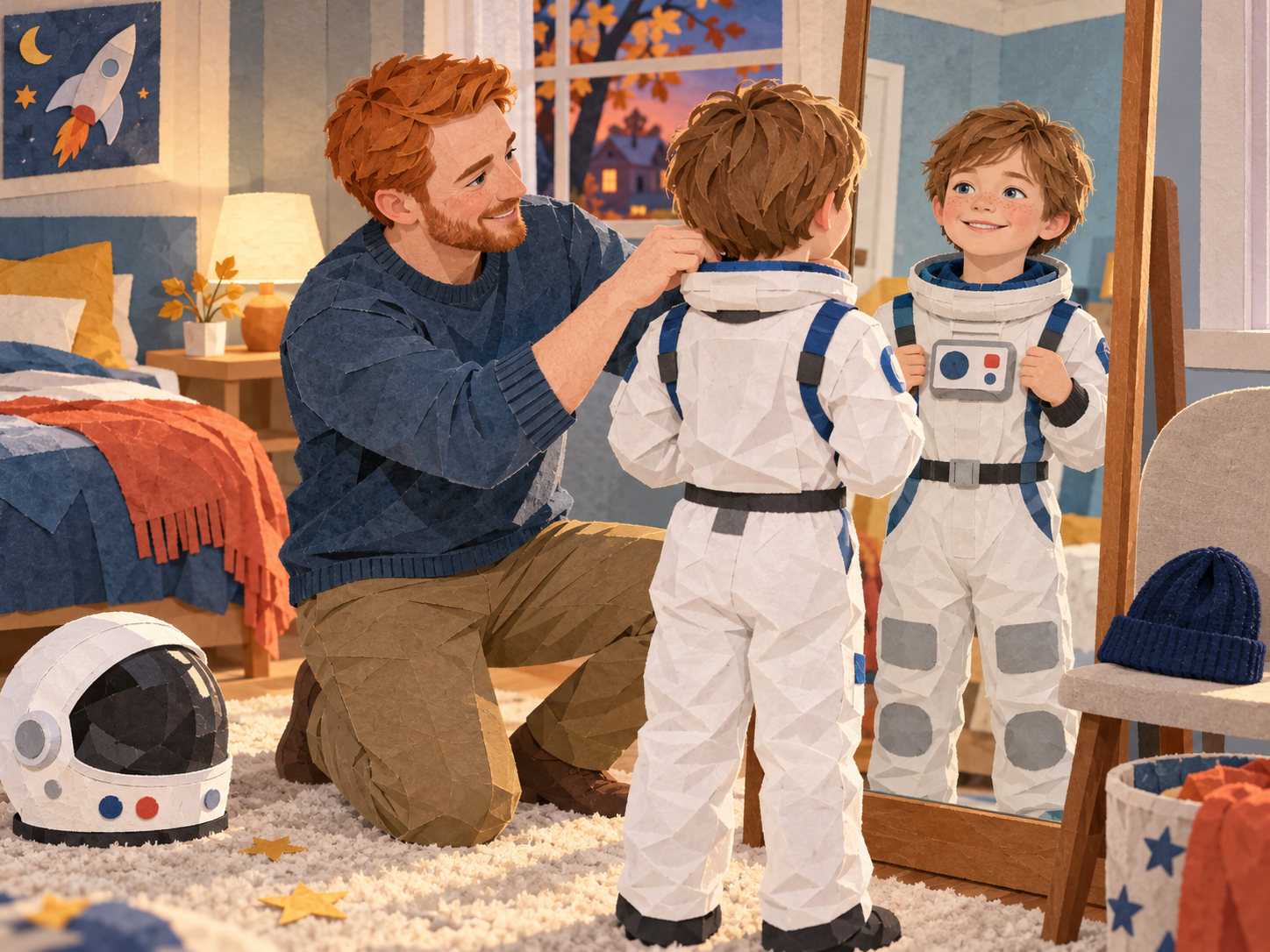
3. Have a Costume Dress Rehearsal
Do not wait until Halloween night to test the complete costume.
A few days beforehand, let the child wear the wig, costume, shoes, accessories, and any makeup they plan to use. Ask them to move the way they will during the event.
They can try:
- Walking up and down stairs
- Bending down to pick something up
- Turning their head from side to side
- Putting on and removing a jacket
- Sitting in a car seat or seat belt
- Carrying a candy bag
- Wearing the costume for 15 to 30 minutes
- Check whether the wig shifts, the headpiece feels heavy, or any part of the costume rubs the scalp, ears, or hairline.
The goal is not to make the costume perfect. It is to identify small problems while there is still time to make comfortable adjustments.
4. Protect a Sensitive Scalp
Areas affected by hair loss may be more sensitive to cold, sun, friction, and irritating products.
Use gentle, familiar products and follow the child’s usual scalp-care routine. Avoid experimenting with new sprays, gels, adhesives, fragrances, glitter, or theatrical products directly on the scalp on the day of an event.
For an outdoor daytime parade or party, protect uncovered areas from the sun with a suitable head covering or broad-spectrum sunscreen recommended for the child. In colder weather, offer a soft, breathable hat or scarf if the child wants one.
Children receiving cancer treatment or caring for burn-related or otherwise sensitive skin may have specific medical instructions. Check with the child’s healthcare team before applying costume makeup, adhesives, temporary color, or other unfamiliar products to the scalp.
Stop using any product that causes burning, pain, itching, redness, swelling, or another unexpected reaction.
5. Use Halloween Makeup Carefully
Face paint can be a fun alternative to a mask, especially because some masks limit visibility. However, even products made for the skin can cause irritation.
The U.S. Food and Drug Administration recommends testing unfamiliar Halloween makeup on a small area of the arm 24 to 48 hours before using it more widely. Do not use the product if redness, swelling, itching, or another reaction develops.
Families should also:
- Use only products intended for cosmetic use
- Read and follow the label directions
- Keep products away from the eyes unless specifically approved for that area
- Avoid craft paint, craft glitter, and non-cosmetic glue on the skin
- Remove makeup according to the product instructions
- Remove makeup gently rather than scrubbing sensitive skin
- Decorative contact lenses should only be used after being properly fitted and prescribed by a qualified eye-care professional.
6. Check the Costume for General Safety
Scalp and wig comfort are important, but the entire costume also needs a safety check.
Choose a costume that fits properly and does not drag on the ground. Long fabric, loose sleeves, and oversized shoes can increase the risk of tripping.
Costumes should not block the child’s vision or breathing. If a mask makes it difficult to see, consider using a hat and skin-safe makeup instead.
For evening activities:
- Add reflective tape or another visible detail
- Carry a flashlight or glow stick
- Choose battery-operated lights instead of open flames
- Keep loose fabric, wigs, and hair accessories away from candles
- Look for costumes labeled flame resistant
Remember that “flame resistant” does not mean that an item cannot burn. Children should still be kept away from open flames and hot decorations.
7. Prepare a Small Comfort Kit
A discreet comfort kit can help a child feel prepared without making the wig or hair loss the center of the evening.
Depending on the child’s needs, the kit might include:
- A soft backup hat or scarf
- A clean wig liner
- A small mirror
- A wide-tooth comb
- A breathable bag for storing the wig
- Any care items recommended by the child’s healthcare team or wig specialist
Choose one trusted adult who knows where the kit is stored and how to help if the child needs an adjustment.
The child may also want to choose a simple signal or code word that means, “I need a private break.”
8. Practice Responses to Questions
Halloween costumes naturally attract attention, but children should never feel obligated to explain their hair loss, diagnosis, or wig.
Before the event, practice one or two responses the child can use if someone asks a question.
For example:
A simple answer:
“My hair looks different right now, and that’s okay.”
A private answer:
“I don’t want to talk about my hair today.”
A costume-focused answer:
“I chose this look because it works with my costume.”
A boundary-setting answer:
“Please don’t touch my hair or wig. Ask me first.”
The child can also walk away, change the subject, or ask a trusted adult for help. They do not owe anyone their medical story.
Adults can support the child by redirecting intrusive questions without creating additional attention.
9. Make Room for Breaks and Changes
A child may love their costume at home and feel differently after an hour of walking, noise, crowds, or attention.
Let them know in advance that they can:
- Remove the wig or headpiece
- Change into a hat or scarf
- Take a private break
- Leave an event early
- Change their costume plan completely
Changing the plan does not mean the night was unsuccessful. Listening to discomfort and asking for help are valuable skills.
10. Check In After the Celebration
At the end of the event, remove the wig, costume accessories, and makeup carefully. Follow the child’s normal wig-care routine and the removal directions provided with any cosmetic product.
Check the scalp for tenderness, redness, pressure marks, or broken skin. If irritation is significant, painful, worsening, or does not improve, contact the child’s healthcare professional.
Instead of asking only whether anyone commented on their hair, try broader questions:
- “What was your favorite part of tonight?”
- “Was anything uncomfortable?”
- “Did you feel like you could ask for help?”
“Is there anything you would change next time?”
This keeps the focus on the child’s complete experience—not only their appearance.
The Best Costume Helps a Child Feel Like Themselves
Halloween does not have to be about hiding hair loss.
It can be an opportunity for a child to experiment, imagine, and decide exactly how they want to be seen. Some children will feel most confident in a familiar wig. Others will choose a hat, costume hair, or no head covering at all.
There is no single correct choice.
The most important things are comfort, safety, personal boundaries, and the child’s voice.
At Little Heroes Hair, we believe every child deserves the freedom to participate in everyday childhood experiences with confidence and joy. We provide free, customized human-hair wigs to eligible children ages 0–18 experiencing medically related or congenital hair loss.
To learn more about our program or begin an application, visit littleheroeshair.org.
This article is for general educational purposes and is not a substitute for medical advice. Families should follow the individual recommendations provided by their child’s healthcare team.
Sources and Further Reading
U.S. Food and Drug Administration: Halloween Safety Tips
U.S. Food and Drug Administration: Novelty Makeup
U.S. Consumer Product Safety Commission: Halloween Costume Safety
American Academy of Dermatology: Alopecia Areata Self-Care
National Cancer Institute: Hair Loss and Cancer Treatment
Comments
No comments yet.